Weekend Times


Google Workspace

Business News

A new report lays out NZ’s humanitarian duties under the laws of war – now it needs an action plan

  • Written by Marnie Lloydd, Senior Lecturer in Law and Co-Director New Zealand Centre for Public Law, Te Herenga Waka — Victoria University of Wellington
A new report lays out NZ’s humanitarian duties under the laws of war – now it needs an action plan

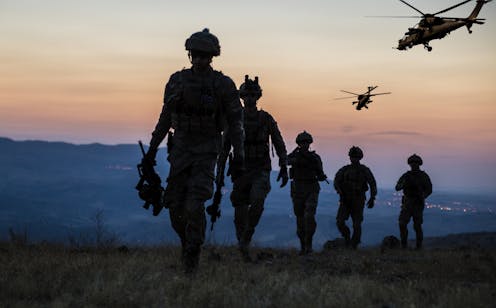
The laws of war might seem of limited relevance in relatively peaceful New Zealand. But our soldiers participate in coalitions fighting wars abroad, and the often flagrant violation of humanitarian law in ongoing conflicts reminds us not to be complacent.

So the launch yesterday of the government’s Report on the Domestic Implementation of International Humanitarian Law[1] was welcome. Timed to coincide with this month’s 75th anniversary of the 1949 Geneva Conventions[2], the report sets out New Zealand’s obligations to protect some minimum human dignity in war. Essentially, international humanitarian law, also known also as the law of armed conflict, places important restraints on how wars may be fought. The new report maps New Zealand’s existing obligations and how they are part of domestic law and policy. In doing so, New Zealand joins other countries that have published such voluntary reports promptly. Australia will also publish its first national report this year. And while states accused of violating international humanitarian law might not follow suit, the broader aim is to keep the issue alive and ultimately strengthen compliance by all countries. Respecting international law Unlike more recent humanitarian treaties, such as those banning landmines or cluster munitions, the Geneva Conventions do not require annual meetings of countries, or require signatories to submit regular reports. This has made compliance a challenge[3]. And attempts since 2011 to gain global political support for some form of regular, voluntary, formal framework have so far faltered. A 2019 resolution[4] at the four-yearly International Conference of the Red Cross and Red Crescent Movement instead encouraged a less politically sensitive alternative: countries would review their own implementation and share best practices through a voluntary national report[5]. How countries implement international humanitarian law – by training their military on the rules, for example, or enacting domestic war crimes legislation – is central to respecting that law. The New Zealand government and local Red Cross pledged to work on this[6] before the next Red Cross conference in late 2024. The resulting report first sets out how New Zealand has signed up to nearly all the key international treaties and made them part of its own laws. It also explains who is responsible for implementing and enforcing those laws, and how the rules of armed combat are taught. This includes various government departments (Defence Force, Ministry of Foreign Affairs and Trade, Crown Law). Non-governmental institutions (Red Cross, education providers) are also involved, for example, by holding events for students and the public to discuss war, peace and humanitarian values. Finally, the report summarises New Zealand’s commitment to specific protections under international law for prisoners of war, women and girls, cultural property and the environment, as well as to rules prohibiting or restricting the use of munitions such as chemical weapons. Ukraine, 2024: The Red Cross and Red Crescent were instrumental in pushing for national voluntary reports. Getty Images What NZ can do next New Zealand has a solid record in ratifying the relevant international humanitarian law treaties and implementing them at home. The Operation Burnham Inquiry[7] into alleged violations by NZSAS troops in Afghanistan, and the laws and policies adopted as recommended by that inquiry, are examples of good practice for other countries to follow – and of the possible challenges in doing so. This is not to say New Zealand has nothing more to do. These national reports also serve to identify gaps in implementation and suggest areas for future efforts. Even Switzerland, birthplace of modern humanitarian law, produced a parallel public action plan[8] to its 2020 voluntary report which detailed future steps for strengthening compliance. Despite having a Disarmament and Arms Control Strategy[9] and a Humanitarian Action Policy[10], New Zealand has yet to produce an action plan to accompany its own voluntary report. Precisely because of New Zealand’s commitment to international humanitarian law, the report should now be used as a tool to further strengthen those efforts. This needs to involve the whole government, not be confined to the military and foreign affairs, and involve Māori and civil society. Lastly, New Zealand must continue to demand respect for these laws by other countries. That includes speaking out about the worst offenders, based on a coherent and consistent foreign policy[11], and supporting Pacific states with their own implementation. Given the death and devastation caused by today’s ongoing wars, this report offers everyone a simple way to engage and reflect on these vital issues of human dignity in peace and conflict. References^ Report on the Domestic Implementation of International Humanitarian Law (www.mfat.govt.nz)^ Geneva Conventions (www.icrc.org)^ compliance a challenge (www.icrc.org)^ 2019 resolution (rcrcconference.org)^ voluntary national report (blogs.icrc.org)^ pledged to work on this (rcrcconference.org)^ Operation Burnham Inquiry (operationburnham.inquiry.govt.nz)^ parallel public action plan (www.eda.admin.ch)^ Disarmament and Arms Control Strategy (www.mfat.govt.nz)^ Humanitarian Action Policy (www.mfat.govt.nz)^ coherent and consistent foreign policy (theconversation.com)Authors: Marnie Lloydd, Senior Lecturer in Law and Co-Director New Zealand Centre for Public Law, Te Herenga Waka — Victoria University of Wellington

Read more https://theconversation.com/a-new-report-lays-out-nzs-humanitarian-duties-under-the-laws-of-war-now-it-needs-an-action-plan-235880

The Weekend Times Magazine

Microbes living on air a global phenomenon

UNSW researchers have found their previous discovery of bacteria living on air in Antarctica is likely a process that occurs globally, further supporting the potential existence of microbial life on...

The Importance of Commercial Fencing: Enhancing Security and Aesthetics

In the world of business, the first impression often sets the tone for what’s to come. When it comes to properties, one of the first things people notice is the...

The Importance Of Choosing Quality Boat Supplies For Safety, Performance And Enjoyable Boating

Whether you are a recreational boater, an angler or someone who spends frequent weekends exploring the shoreline, investing in reliable boat supplies is essential. Quality supplies improve the functionality of your...

Launching Weekly Campaigns with Zero Dev Involvement: The Headless Advantage

Marketing teams are forever tasked with more and more quickly. It wasn't long ago that launching a campaign weekly was a stretch goal and not a minimum viable timeframe. Today...

Republicans have used a ‘law and order’ message to win elections before. This is why Trump could do it again

In 1991, Donald Trump’s mother, Mary, was mugged on a New York street. As Trump’s niece recounts in her new book, the young assailant slammed Mary’s head into her Rolls...

How to cook tender chicken breasts perfectly, every time

Celebrity chef, Manu Feildel, reveals his fail-safe, easy process to cook delicious, juicy chicken breasts – every time.   How often have you cooked chicken breast only to discover it’s dry and...

Building Designer in Melbourne: Crafting Innovative, Functional, and Sustainable Spaces

In a city celebrated for its architectural excellence and diverse urban character, the role of a building designer Melbourne has never been more important. Melbourne’s built environment is a dynamic blend...

The 29-year-old Australian Revolutionising The Edible Collagen Market

Known as ‘Nature’s Botox’, scientific research shows collagen is not only anti-ageing and good for skin, but also optimises health, ligaments, muscle recovery, the gut, and helps heal the digestive...

House Builders in Melbourne Delivering Homes Built for Modern Living

Choosing the right house builders Melbourne is one of the most important steps in creating a home that feels comfortable, functional, and built to last. House builders play a central role...