What Perth Businesses Get Wrong About Commercial Relocation (And How to Get It Right)
- Written by: Weekend Times
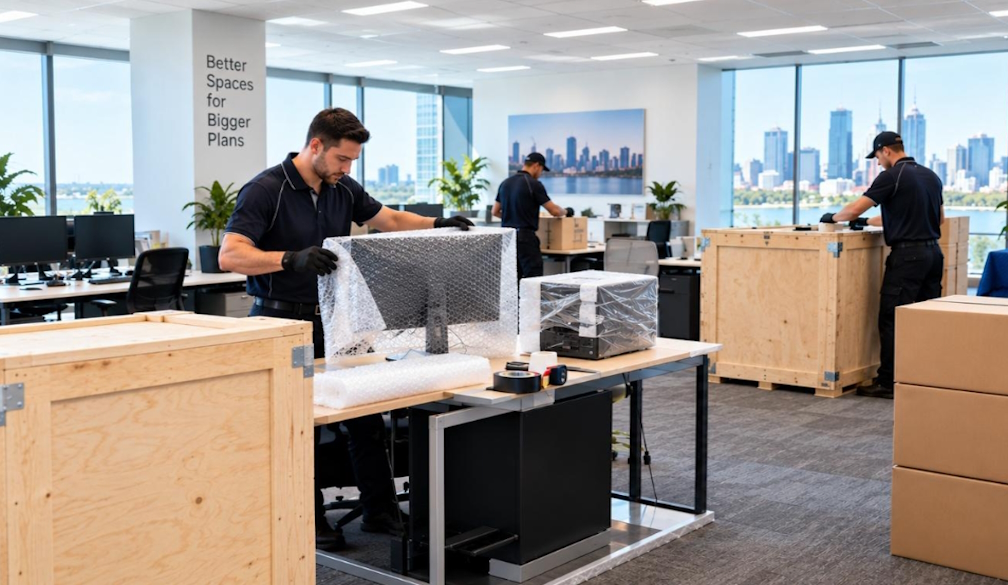
The decision to relocate a business is rarely spontaneous. There's usually a growth inflection driving it - more staff, a lease that no longer fits, a strategic push into a new area, or a landlord who's made staying unattractive. Whatever the trigger, the move itself is operationally significant, and the cost of getting it wrong extends well beyond the removalist invoice.
This is what businesses in Perth consistently underestimate about commercial relocation and what distinguishes companies that move smoothly from those that spend the first fortnight in their new premises recovering from the last two days in the old one.
The Removalist Is Not the Risk. The Timeline Is.
Most business owners who've had a difficult commercial move don't point to the removalist's competence as the core problem. They point to the timeline. The move was booked for a weekend. IT wasn't ready. The new office still had a fitout crew on site. Staff arrived Monday expecting to work, and the kitchen equipment was sitting in the foyer because nobody had confirmed the pantry layout in advance.
Commercial removalists Perth can execute a move in the time window you give them. What they can't do is compress the coordination failures that accumulate in the weeks before.
The single most effective thing you can do for a commercial relocation is appoint one internal coordinator, someone with decision-making authority over the move - who works directly with the removalist from the planning stage. Not a committee, not a rotating responsibility, not whoever is least busy. One accountable person who knows the floor plan at both ends, who confirms IT readiness, who liaises with building management, and who can make calls on moving day without needing to escalate.
What a Professional Commercial Move Actually Includes
There's a significant gap between what a residential removalist can do for a business and what a dedicated commercial removalist brings to the task. That gap matters because commercial assets have different risk profiles, different handling requirements, and different consequences when something goes wrong.
Labelled crate systems. The defining feature of a well-run office removalists in Perth is the crate system. Each crate is assigned to a specific staff member or a specific zone in the new office. Contents are recorded, location is marked. When the crate arrives at the new premises, it goes to a specific spot — not to a pile in the middle of the floor. Staff can unpack their own workstation on day one without searching for their monitor cable across seventeen unlabelled boxes.
The crate system is not a luxury. It's the operational mechanism that determines whether your team loses two hours or two days getting back to full capacity.
IT and technology handling. Servers, networking equipment, specialist peripherals, trading terminals — each carries its own handling requirements, and each has a replacement cost that dwarfs the cost of proper packing. A commercial removalist with genuine IT infrastructure experience will have clear protocols for power-down sequences, cable documentation, transportation, and setup sequence. Ask specifically how they handle your type of equipment before assuming it's covered.
After-hours scheduling. If your business operates Monday to Friday and you can't afford significant downtime, your move needs to happen outside business hours. Friday night to Saturday delivery, Saturday setup, Monday operation. This is a standard commercial requirement for experienced operators, if an operator can't accommodate it or adds substantial premium without clear justification, that's worth noting.
Warehouse and industrial equipment. A commercial move that includes a warehouse component is materially different from an office move. Industrial racking, heavy equipment, pallet movers, stock management during the transition, warehouse removalists need not just physical capability but operational understanding of your workflow. Stock continuity during the move needs planning: what ships before the move, what stays to fulfil during transition, what can be disrupted and for how long.
The IT and Operations Pre-Move Checklist Most Businesses Skip
The week before a commercial move, operations managers are usually focused on logistics. The IT and operations checklist tends to get compressed or delegated. Here are the items that consistently cause day-one problems when they're not addressed:
Internet connectivity at the new premises. Enterprise-grade internet in a new tenancy is not always active on moving day. If your provider needs lead time and most do the time to confirm that connection is live is the week before the move, not the morning of. If it's not live, the move date may need to change or you'll need a cellular backup arrangement confirmed in advance.
Phone number porting. If your business has geographic phone numbers and you're moving, porting may require carrier lead time. Temporary call forwarding is a minimum requirement to avoid calls hitting a disconnected number during transition.
Server and data backup. All servers should be fully backed up to an offsite or cloud location before the move begins. This is standard advice that gets treated as obvious and then skipped under the pressure of packing. Make it a written checkpoint, not an assumption.
Access credentials at the new premises. Staff who arrive Monday morning need to be able to enter the building, access their floor, and reach their workstations. This sounds elementary and yet building management systems, key fobs, and access cards that work in the old premises frequently need to be re-provisioned for the new one.
Parking. Not glamorous, but real. Staff who drive to work and who have been parking in an allocated spot need to know their arrangement at the new location before moving day. This is particularly relevant for businesses moving to a CBD or a denser suburban precinct than they're currently in.
Interstate Commercial Moves: An Additional Layer
Some businesses are not just moving premises within Perth, they're relocating operationally interstate. This is common for businesses expanding into the eastern states, for businesses that have outgrown the WA market, and for businesses whose ownership or key personnel are relocating interstate and bringing the business with them.
Interstate removals Perth for commercial clients add a layer of complexity to each of the points above. The gap between vacating and occupying is typically longer — five to eight days of transit plus however long the new premises take to be ready — which means contingency planning for operations during transit is more significant.
Container storage bridges this gap. A business that packs its moveable assets into secure containers can vacate the old premises on schedule and take delivery of its goods at the new location when it's ready, rather than managing a hard handover that requires both premises to be ready at the same time.
For businesses with significant stock or specialised equipment, an interstate removalists Perth operator with genuine commercial capability will develop a specific transit plan, not just "your goods leave Monday and arrive Thursday" but a sequenced operational plan that addresses what moves first, what stays until last, and what the fallback is if the new premises aren't ready on schedule.
Choosing the Right Commercial Removalist in Perth
The selection criteria for a commercial removalist are different from those for a residential one. Here's what matters most.
Relevant commercial references. Ask for references from businesses of a similar size and type. An office move for 15 people and a warehouse relocation for a light industrial business are different operations. You want evidence of experience with your specific situation, not general removalist capability.
A detailed site survey. Before any quotation is finalised, a credible commercial removalist will visit both premises. They need to understand access constraints at each end, building management requirements (including approved lift times, loading dock bookings, and floor protection), and the specific items being moved. A quote provided without a site visit is an estimate, not a plan.
Written scope and timeline. The agreement should specify exactly what's being moved, the timeline for each phase, who's responsible for what, and what the process is if things deviate from plan. Verbal agreements about "we'll sort it on the day" create accountability gaps that become problems.
Insurance coverage. Understand specifically what your commercial goods are covered for during transit. Business equipment, IT infrastructure, and stock may require coverage beyond what a standard removalist policy provides. Confirm this in writing before moving day.
Conclusion
Commercial relocation done well is an operations management exercise as much as a logistics one. The removalist's job is to move your assets safely and efficiently. Your job or your coordinator's job is to ensure that the premises, the IT, the staff, and the timing are aligned so that the move can succeed.
Engage commercial removalists Perth who conduct site surveys, use crate systems, and have genuine experience with your type of business. Plan the IT and operations checklist separately from the physical logistics. And give yourself more lead time than you think you need commercial moves almost always have a complicating factor that surfaces in the final week.
A business that moves well loses a weekend. A business that moves poorly can lose weeks.