The government has proposed new laws for tackling illegal tobacco, but they likely won’t do much
- Written by: Weekend Times
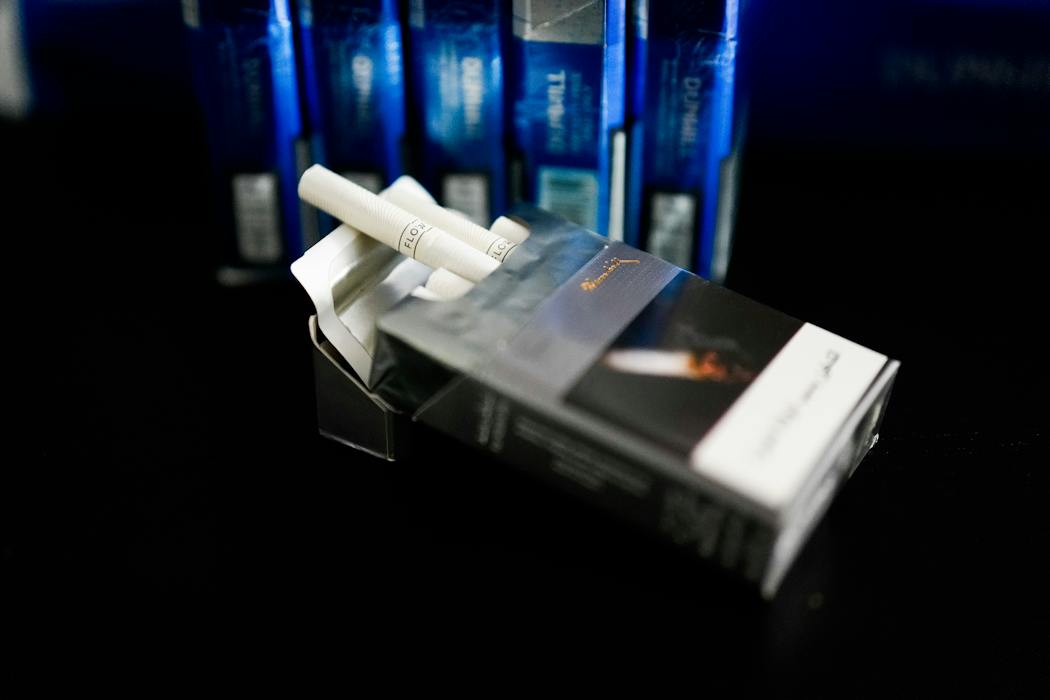
The federal government has introduced a new bill to parliament intended to make it easier to prosecute people involved in the illicit tobacco trade.
If passed, the changes
to the Customs Act mean prosecutors will no longer need to prove an accused person knew the tobacco they were handling had been smuggled.
Instead, authorities will be able to point to the characteristics of the product itself – an implausibly low price, non-compliant packaging, concealment – to establish that it entered the country unlawfully.
The bill also expands powers to obtain documents and confiscate the proceeds of crime.
It’s the second Commonwealth bill cracking down on illicit tobacco this year. In March, the Combating Illicit Tobacco Bill increased maximum penalties and gave law enforcement the right to use wiretaps when investigating tobacco offences.
States have similarly expanded enforcement and penalties, introducing store closure powers, multi-million dollar fines and lengthy prison sentences.
There’s an emerging pattern. With few signs the sale of illegal tobacco products is being curtailed, each round of punitive laws seems to produce more rounds of even more punitive laws. It’s an escalating spiral of legislation, but with little improvement to show for it.
Read more: Three things Australia must do to end the tobacco wars
The scale of the problem
On a superficial level, further expanding police powers and penalties appears to make sense.
Following the imposition of the world’s highest tobacco taxes, and the prohibition of vapes and other less harmful nicotine products, criminals have launched a hostile takeover of the nation’s nicotine trade.
The Australian Bureau of Statistics recently estimated up to 80% of all nicotine consumed in Australia is illicit. Annual expenditure is estimated to be up to A$8.5 billion – more than on cannabis, cocaine, ecstasy and heroin combined.
Competition among organised crime for these massive profits has prompted increasingly serious crimes, including more than half a dozen homicides, robberies and extortion targeting both legal and illicit retailers. As of Tuesday, we saw the 305th tobacco-related firebombing reported in the media since January 2023.
Even if smoking rates are falling – the national survey and the state and commercial surveys tell conflicting stories – it is a strange definition of success in which fewer people use nicotine while an increasing proportion buy it from organised crime.
Why enforcement is failing
The underlying assumption of the latest round of legislation is that a lack of penalties and police powers are the reasons for the ongoing growth of the black market.
This was the same justification provided for previous legislation prohibiting the commercial sale of vapes and the increase in penalties for engaging in the illicit trade.
The implicit logic is clear: legislate hard enough and criminals will get the message and exit the market.
But three years and $350 million in additional enforcement expenditure later, illicit tobacco and vapes remain easily accessible on practically every high street in the country.
This is not unexpected. Criminological research consistently shows it’s not the severity of penalties that matter, but rather the certainty of being caught.
This suggests the real problem is not a lack of police powers, but the extraordinary scale of the market.
With an estimated 40,000 retailers and millions of consumers routinely breaking the law, the odds of any individual criminal supplier being caught remain implausibly low. The new bill does nothing to address this.
Can enforcement ever be enough?
So, can enforcement ever feasibly be ratcheted up to have a deterrent effect?
Unfortunately, our experience with the broader “war on drugs” – and indeed the failed experiment with alcohol prohibition in the United States a century ago – suggests a resounding “no”.
Despite Australia’s ever growing, multi-billion dollar investment in enforcement, and yearly record levels of arrests and seizures, illicit drugs remain cheaper and more readily available than ever.
A big part of the problem is who the laws are most likely to affect. Assistant Minister for Customs Julian Hill claims the laws will target “serious criminals”, ranging from those “high up in the crime groups, mid-level operatives, distributors or those running and working in the shops”.
However, in practice, the new laws will almost certainly not affect those at the top of the criminal hierarchy, who rarely, if ever, would be caught handling an illicit product.
Instead, the laws will likely reach mules involved in transportation and those sitting behind a shop counter. These are the most easily replaceable personnel in any drug operation, and those who profit the least.
What this shows is a broader failure in our illicit drug strategy, one increasingly being applied to nicotine. Where a black market has already reached mass scale, the evidence shows further enforcement buys very little.
Suppliers pass the cost of seizures and arrests on to consumers, replace incarcerated personnel from a steady supply of people with few legitimate alternatives, and distribute through networks dense enough to absorb the loss of any individual node.
In other words, legal restrictions are not an effective barrier for organised crime – they are necessary for their business model.
Read more: If recreational vapes are banned, why are there still vape shops everywhere?
Ever-expanding prohibition
The underlying driver of the illicit market is the restriction on legal supply in a context of strong, persistent consumer demand.
Without addressing this driver, the only option the Commonwealth has is to double down further on enforcement. This creates the sort of escalating spiral we have warned about previously.
What the government has not yet done is examine highly regressive tobacco taxation and its rejection of reduced harm alternatives. It should evaluate whether they are fit for purpose, ethically or practically.
The Coalition, One Nation, and a cross-party New South Wales parliamentary inquiry, including state Labor and Greens, have endorsed this re-evaluation, recommending both reduced taxation and reconsideration of the ban on vapes.
The division is therefore not partisan but jurisdictional, with the Commonwealth collecting the excise while the states are left with the mess.
The continued expansion of the illicit market in the presence of increasing enforcement, and the fact that millions of our fellow citizens have become unwilling accomplices in organised criminal activity, should be seen as evidence that current federal policies are ill-conceived.
Until that happens, the response to each failure of prohibition will be more prohibition.
James Martin receives funding from the Department of Home Affairs to conduct research into the Australian illicit tobacco and nicotine markets. The views expressed in this piece do not necessarily reflect those of the funder. James has received data from British American Tobacco Australia for a research project conducted in conjunction with Victoria Police. The provision of this data was one-way and approved by the Deakin University Human Research Ethics Committee. British American Tobacco Australia received no benefit, consideration or influence in return. James also has an unpaid role as an advisor to the board of the non-profit organisation Harm Reduction Australia. This arrangement creates no obligations and in no way compromises James' independence. James has never received any funding from the tobacco or nicotine industries.
Edward Jegasothy receives funding from the Department of Home Affairs to conduct research into the Australian illicit tobacco and nicotine markets. The views expressed in this piece do not necessarily reflect those of the funder. He is also a member of the Public Health Association of Australia. He has never received funding from the tobacco or nicotine industries.