what te ao Māori can teach us about sustainable management
- Written by: Ben Walker, Lecturer (Management), Te Herenga Waka — Victoria University of Wellington
Editor’s note: This article has been translated by Piripi Walker for Te Wiki o te Reo Māori/Māori Language Week. Click here[1] to read it in te reo Māori.
Walk into any boardroom or business school and you’ll often hear the same companies held up as models of excellence: Apple, Tesla, Google and so on. Sharing success stories from te ao Māori (the Māori world)? Not so much.
And that’s a shame. There are many of them, and they can teach us how to manage and grow organisations in sustainable ways that benefit the wider community — goals that often elude large Western businesses.
Insights into innovative and sustainable management are woven through the history of te ao Māori — from Kupe and his crew’s discovery of Aotearoa[2] some 800 years ago to more recent efforts to revitalise te reo[3], reclaim land and protect wāhi tapu[4] (sacred sites).
Broadly, we can bundle these insights into three management principles. We argue these will be recurring themes in future business success stories.
Embracing wider definitions of success
A common feature of Māori organisations, and one that’s often explicit in their strategic planning[5], is their focus on judging success against many criteria, not only financial ones.
Nowadays, of course, even the biggest businesses claim to value sustainability and other non-financial outcomes. But it’s usually accepted that the ultimate goal of such businesses has stayed the same — to turn a profit for shareholders.
This is rarely the case for Māori organisations, which almost always put community, environmental and cultural impacts[6] at the centre of what they do. Such an approach comes naturally to those in te ao Māori, as these values are also central to the culture.
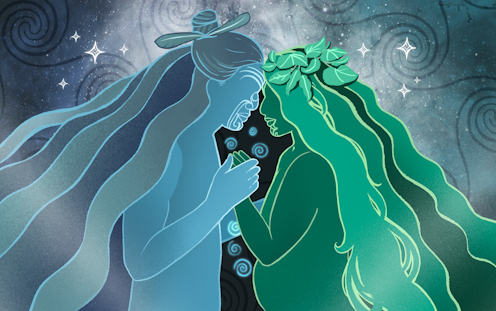
Community and ecological concerns are everywhere in te ao Māori, from the ancient pakiwaitara (legends) about how our world came to be, to the karakia (prayers) said before significant events.
Sustaining community and environment is also central to tikanga[7], the system of values and practices that inform our way of living.
None of this is to say that Māori businesses don’t care about conventional measures of success. In fact, the Māori economy may be the fastest growing[8] part of the New Zealand economy in purely financial terms.
But whereas conventional companies prioritise profit, for Māori (and indeed Indigenous businesses around the world), making money is usually seen as a stepping stone to more valued destinations: community well-being, a political voice and environmental sustainability[9].
Taking the long view
Māori organisations also tend to take a long-term perspective when making important decisions.
In a typical corporation, managers are hyper-focused on quarterly or annual results. But it’s not uncommon for Māori organisations to approach things from a multi-generational standpoint, where success is measured over decades and sometimes even centuries.
In 1975, for example, the iwi of Ngāti Raukawa, Ngāti Toa and Te Atiawa jointly created a 25-year strategic plan known as Whakatupuranga Rua Mano[10] (Generation 2000). One of the fruits of this strategy was Te Wānanga o Raukawa[11], an institute for Māori-focused tertiary education, a first of its kind.
More recently, Wakatū Incorporation has started work on a strategic plan[12] spanning more than 50 years. And Rachel Taulelei, CEO of Wakatū-owned food and beverage company Kono, has been emphatic that the company is working to an ambitious 500-year horizon[13] in its planning.
A major reason[14] Māori organisations think in such long time frames is whakapapa. In te ao Māori, whakapapa is more than just one’s line of descent. It is a value, a way of being that encourages people to think and act not as individuals, but as links in the chain between past ancestors and future generations.
Connections with community
Finally, Māori businesses place their communities at the centre of management thinking. This is often reflected in how they create and maintain their leadership[15].
In large corporations, for example, board members (those responsible for the overall direction of the organisation) are typically appointed by existing members on the basis of their business acumen. In Māori organisations, however, boards are often democratically elected by the community they serve.
Because of this, Māori organisation boards tend to be diverse in the expertise and viewpoints they bring to the table.
Most importantly, though, the election of board members means community views are represented in an organisation’s most important decisions.
For example, one Māori organisation we know of has been considering a radical departure from its core business into providing social housing because so many in the community are struggling to find affordable places to live.
There has been a welcome shift in Aotearoa’s relationship with its taha Māori (Māori side) in recent years. While there’s still much ground to make up, New Zealanders increasingly see value in learning te reo[16] and recognising Māori artforms[17].
Māori approaches to business and management can be equally enlightening. By giving us a glimpse of how to tackle troubling issues like inequality and climate change, te ao Māori can help us all build better businesses for the future.
References
- ^ Click here (theconversation.com)
- ^ discovery of Aotearoa (www.youtube.com)
- ^ revitalise te reo (www.jstor.org)
- ^ protect wāhi tapu (www.maoritelevision.com)
- ^ strategic planning (www.youtube.com)
- ^ community, environmental and cultural impacts (www.cambridge.org)
- ^ tikanga (maoridictionary.co.nz)
- ^ fastest growing (chapmantripp.com)
- ^ environmental sustainability (www.youtube.com)
- ^ Whakatupuranga Rua Mano (www.mcguinnessinstitute.org)
- ^ Te Wānanga o Raukawa (www.wananga.com)
- ^ strategic plan (www.wakatu.org)
- ^ ambitious 500-year horizon (www.stuff.co.nz)
- ^ major reason (openaccess.wgtn.ac.nz)
- ^ create and maintain their leadership (www.tpk.govt.nz)
- ^ learning te reo (educationcentral.co.nz)
- ^ Māori artforms (www.tvnz.co.nz)
Authors: Ben Walker, Lecturer (Management), Te Herenga Waka — Victoria University of Wellington