A foot and mouth outbreak in NZ would affect more than agriculture – tourism needs a plan too
- Written by: Stu Hayes, Lecturer, Tourism, University of Otago
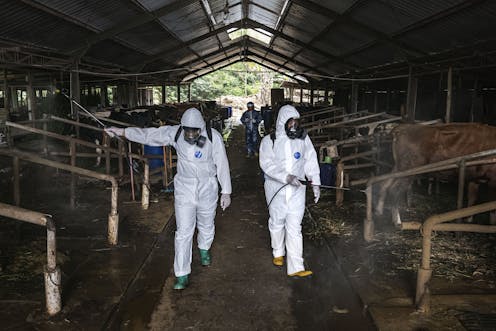
Recent warnings[1] of a “doomsday” scenario if foot and mouth disease[2] (FMD) arrived in New Zealand inevitably singled out the agriculture sector. But overseas experience tells us FMD can also result in potentially severe impacts on the tourism sector.
As the 2001 FMD crisis in Britain highlighted, inadequate planning and crisis management can cause a reduction in trade, job losses and damage to a destination’s image.
This matters, because destination image[3] is one of the leading factors influencing tourists’ decisions. Accurate or not, negative images in the media can directly affect demand.
As New Zealand ramps up preparations[4] for a potential outbreak, important lessons from the UK’s experiences must be heeded if the local tourism sector is to avoid its own doomsday scenario.
Focus on agriculture
Following the detection in July[5] of FMD fragments in meat products imported into Australia, the New Zealand government has expressed serious concern the disease could also find its way across the Tasman.
The economic impact[6] of this for the agriculture sector would be catastrophic: a reduction in agricultural productivity, suspended trade in animal products, and the ongoing reputational damage of the country losing its FMD-free export status.
Read more: What is foot and mouth disease? Why farmers fear 'apocalyptic bonfires of burning carcasses'[7]
These concerns were foregrounded in the 2018 Foot and Mouth Disease Response and Recovery Plan[8]. The risk to the agriculture sector has also seen a recent strengthening of biosecurity measures[9], including at the border where people arriving from Indonesia (FMD was detected there[10] on April 28) are now required to disinfect their footwear.
But when it comes to government planning for (and media reporting about) FMD, there appears to be no mention of the potential impacts of an outbreak for the tourism sector. Should we be worried? A brief look at what happened in the UK in 2001 suggests yes.
The UK’s FMD tourism disaster
FMD was discovered[11] in an abattoir in Essex on February 19, 2001. The unexpectedly rapid spread of the virus resulted in the UK government’s decision to effectively close the countryside[12] to avoid wider contamination.
The effects on the tourism sector were severe. A National Audit Office report[13] indicated that the sector and supporting industries lost revenues of between £4.5 billion and £5.4 billion. Over the course of the crisis, overseas visitor numbers to the UK dropped by 10%[14]. In worst hit rural areas, the tourism sector virtually collapsed[15].
Read more: Yes, wash your shoes at the airport – but we can do more to stop foot-and-mouth disease ravaging Australia[16]
Inevitably, there were significant tourism-related job losses[17] associated with the decline in visitor numbers and spending.
At the same time, the government decision to cull livestock rather than vaccinate resulted in huge pyres of burning carcasses visible throughout farming districts. It ended with what was described[18] as a “media frenzy showing the UK as a giant barbeque”.
The images damaged the reputation and image[19] of the UK as a tourism destination and further contributed to the loss of tourism revenue and jobs. But could these impacts have been lessened? Past research suggests they could – and with this come important lessons for New Zealand.
Read more: Australian agriculture’s biggest threat needs a global approach[20]
Lessons from the 2001 UK FMD crisis
Reviews of the UK FMD crisis highlighted several key planning and crisis management failings that contributed to the severity of the impacts felt across the tourism sector.
a lack of appreciation of the potential impacts of FMD for the tourism sector
a lack of consultation with relevant stakeholders from the tourism sector in crisis planning for an FMD outbreak
and lack of an integrated communication strategy to counter media tendencies to exaggerate the impacts[22].
To help limit the potential impacts of an FMD outbreak for the New Zealand tourism sector, the government should consider several urgent actions:
1) model the potential impacts of FMD on the tourism sector, including potential job losses, loss of tourism trade and potential impacts on destination image and reputation
2) prepare crisis management plans with the full engagement of key actors in the tourism sector, including relevant ministries and sector bodies
3) establish an integrated communication approach and offer public relations training for tourism enterprises to help maintain a positive destination image in the event of an FMD outbreak.
As the 2001 UK FMD crisis demonstrated, failure to act could be disastrous for the tourism sector in New Zealand.
References
- ^ warnings (www.stuff.co.nz)
- ^ foot and mouth disease (www.mpi.govt.nz)
- ^ destination image (destination-review.com)
- ^ ramps up preparations (www.reuters.com)
- ^ detection in July (www.abc.net.au)
- ^ economic impact (www.mpi.govt.nz)
- ^ What is foot and mouth disease? Why farmers fear 'apocalyptic bonfires of burning carcasses' (theconversation.com)
- ^ Foot and Mouth Disease Response and Recovery Plan (www.mpi.govt.nz)
- ^ strengthening of biosecurity measures (www.beehive.govt.nz)
- ^ FMD was detected there (www.rnz.co.nz)
- ^ discovered (www.bbc.com)
- ^ close the countryside (www.researchgate.net)
- ^ National Audit Office report (webarchive.nationalarchives.gov.uk)
- ^ dropped by 10% (www.bbc.com)
- ^ virtually collapsed (www.researchgate.net)
- ^ Yes, wash your shoes at the airport – but we can do more to stop foot-and-mouth disease ravaging Australia (theconversation.com)
- ^ tourism-related job losses (www.researchgate.net)
- ^ described (www.researchgate.net)
- ^ damaged the reputation and image (www.researchgate.net)
- ^ Australian agriculture’s biggest threat needs a global approach (theconversation.com)
- ^ failings (webarchive.nationalarchives.gov.uk)
- ^ exaggerate the impacts (www.researchgate.net)
Authors: Stu Hayes, Lecturer, Tourism, University of Otago