Australia is about to set its first full employment target – and it will define people's lives for decades
- Written by: Peter Martin, Visiting Fellow, Crawford School of Public Policy, Australian National University
Stand by for one of the most important decisions Treasurer Jim Chalmers and the Albanese government will make.
That decision is to commit future governments and the Reserve Bank to full employment, and, more importantly, spell out what that means.
The Australian government hasn’t wholeheartedly and publicly committed itself to full employment since the 1945 Full Employment White Paper[1], released as the second world war was drawing to a close and Australia was gearing up for peace.
The definition Chalmers chooses – whether it specifies an unemployment rate of 3.5%, 4.5%, or the more ambitious target of 3% I would most like – could reverberate for as many decades as the white paper did in 1945.
Tuesday’s Reserve Bank decision[2] not to increase interest rates further makes it more likely we could end up with a more ambitious target.
Australia’s daunting post-war challenge
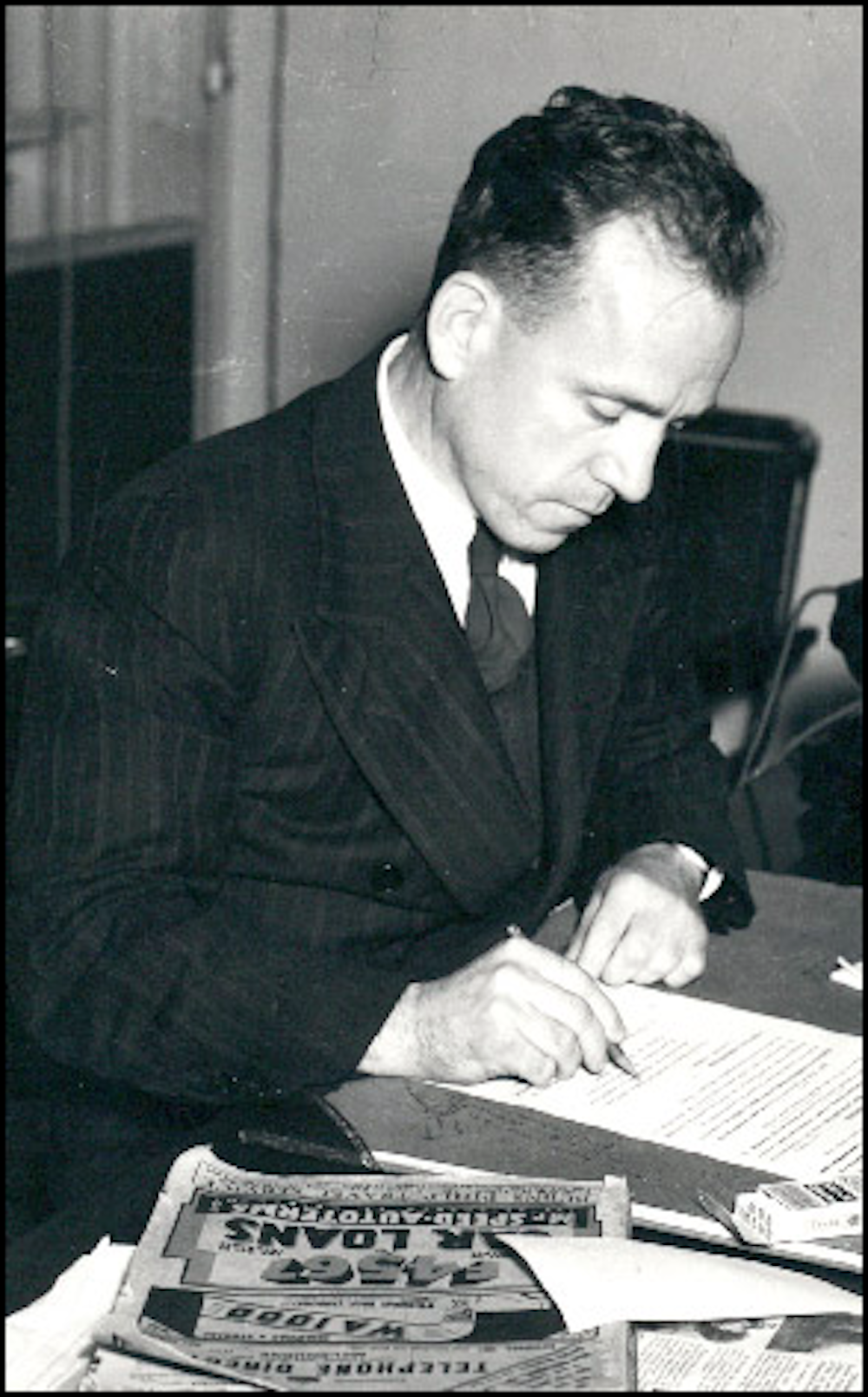
The 1945 white paper was prepared for Prime Minister John Curtin by a committee led by the head of post-war reconstruction HC “Nugget” Coombs[3].
In the 20 years leading up to the war, more than 10% of workforce had been out of work, climbing to 25% during the depression. The committee wanted the all-out mobilisation necessitated by war to be continued[4] into the peace.
Their challenge was to find jobs for the 1 million defence staff who would be returning to civilian life.
Achieving that would require governments to actively stimulate private spending, through their own spending and through monetary and other policies “to the extent necessary to avoid unemployment and the consequent waste of resources”.
That was an idea accepted by both Labor and Coalition governments right through to the 1970s, where unemployment remained as low as 2%. It was also one Coombs himself adopted as the first head of the Reserve Bank of Australia from 1960.
But the employment target Coombs helped write in to the Reserve Bank Act was fuzzy: it simply committed the bank to “the maintenance of full employment in Australia[6]”.
Finally setting a jobs target
Fast forward to March 2023, when the treasurer was handed the review of the Reserve Bank, “An RBA fit for the future”[7].
That final report pointed out the bank’s target for inflation is specific – defined in a written agreement with the treasurer as “2-3% on average, over time[8]”.
In contrast, the bank’s target for employment has no numbers attached – resulting in inflation getting prioritised.
While it is true that putting a number on a target doesn’t guarantee an outcome, the number put on the inflation target does seem to have helped bring it down.
The RBA review recommended the treasurer’s agreement with the bank be updated, requiring it to adopt an explicit target for “full employment”. That would most likely be expressed via a range of indicators, including the unemployment rate, the underemployment rate, and the tenure of employment.
Chalmers says he will update the agreement and issue the direction by the end of the year. Before then, next month he will make public his own target for full employment via his employment white paper[9], now being prepared by the treasury.
Read more: Why there's no magic jobless rate to increase Australians' wages[10]
Moving unofficial targets of the past
The numbers that the treasurer and the Reserve Bank adopt will matter enormously. And it’s worth clarifying that the target can’t be an unemployment rate of zero.
There will always be some temporary unemployment as people move between jobs. That’s also the case when people leave industries that are no longer needed – such as thermal coal mining in the years ahead, as our energy mix changes – and go on to retrain for jobs in emerging industries.
Read more: With unemployment steady at 3.5%, inflation fears shouldn't stop Australia embracing a full employment target[11]
For a while in the 1990s, the Reserve Bank acted as if full employment meant an unemployment rate of 7%[12]. That was its estimate of the “non-accelerating inflation rate of unemployment” (also known as NAIRU[13]), the rate needed to stop shortages of useful workers pushing up inflation.
In 2017, the bank cut that estimate to 5%[14] and then 4.5%[15] in 2019. Then, about a year after COVID hit, it appeared to cut it further when Governor Philip Lowe said in 2021 there was a chance Australia could achieve and sustain an unemployment rate in the “low fours[16]”, although only time would tell.
The lower our target, the more secure we will be
The unemployment rate is now 3.5%[17] – a near five-decade low.
If the government and the bank choose to adopt 3.5% as a target, it would put 150,000 more Australians into work than would a higher unambitious target of 4.5% – in perpetuity.
A lower target of 3% (not too far above the 2%[18] Australia achieved from 1940 to 1974) would do much more than put people into jobs and better use our resources.
It would help us adapt to change in the way we are going to need to.
Creating confidence to face change
The 1945 white paper was on to this, at another time of massive transition when the wartime industries were dying and the peacetime industries emerging.
It said an assurance of full employment would
assure workers that the community has need of their services somewhere, and will restore the basic sense of security without which new risks will not readily be undertaken.
It’s a point echoed by Prime Minister Bob Hawke’s former economic advisor, Ross Garnaut, in an address to the Australian Conference of Economists[19] last month.
He said unless there was confidence in high employment, every time an industry or employer was threatened with closure, there would be a cry of “jobs, jobs, jobs” as workers fought to protect what they had.
Read more: Australia is on the brink of ending interest rate hikes and an economic first – beating inflation without a recession[20]
Garnaut told me it was a lesson he learned from Hawke when he signed on with the prime minister in 1983. Hawke agreed with him that the economy would have to change and some industries would have to die. But Hawke told him he wasn’t going to bring on those changes until unemployment was clearly coming down.
When people knew they could get another job, they would accept change.
Now, as in the 1940s and 1980s, we need that confidence. If Chalmers and the Reserve Bank adopt an ambitious target, they’ll create it and set us up for the challenges ahead.
References
- ^ Full Employment White Paper (trove.nla.gov.au)
- ^ decision (www.rba.gov.au)
- ^ HC “Nugget” Coombs (www.science.org.au)
- ^ continued (www.billmitchell.org)
- ^ RBA (www.rba.gov.au)
- ^ the maintenance of full employment in Australia (www.rba.gov.au)
- ^ “An RBA fit for the future” (rbareview.gov.au)
- ^ 2-3% on average, over time (www.rba.gov.au)
- ^ employment white paper (treasury.gov.au)
- ^ Why there's no magic jobless rate to increase Australians' wages (theconversation.com)
- ^ With unemployment steady at 3.5%, inflation fears shouldn't stop Australia embracing a full employment target (theconversation.com)
- ^ 7% (www.rba.gov.au)
- ^ NAIRU (theconversation.com)
- ^ 5% (www.rba.gov.au)
- ^ 4.5% (www.rba.gov.au)
- ^ low fours (www.rba.gov.au)
- ^ 3.5% (www.abs.gov.au)
- ^ 2% (www.rba.gov.au)
- ^ Australian Conference of Economists (ace2023.org.au)
- ^ Australia is on the brink of ending interest rate hikes and an economic first – beating inflation without a recession (theconversation.com)
Authors: Peter Martin, Visiting Fellow, Crawford School of Public Policy, Australian National University